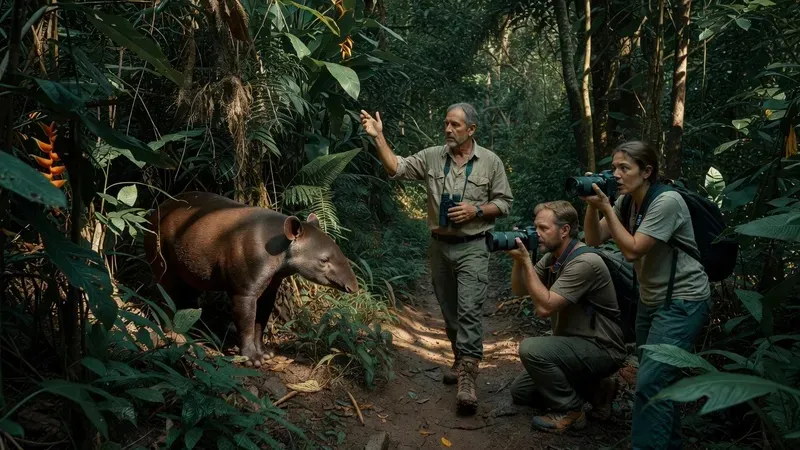
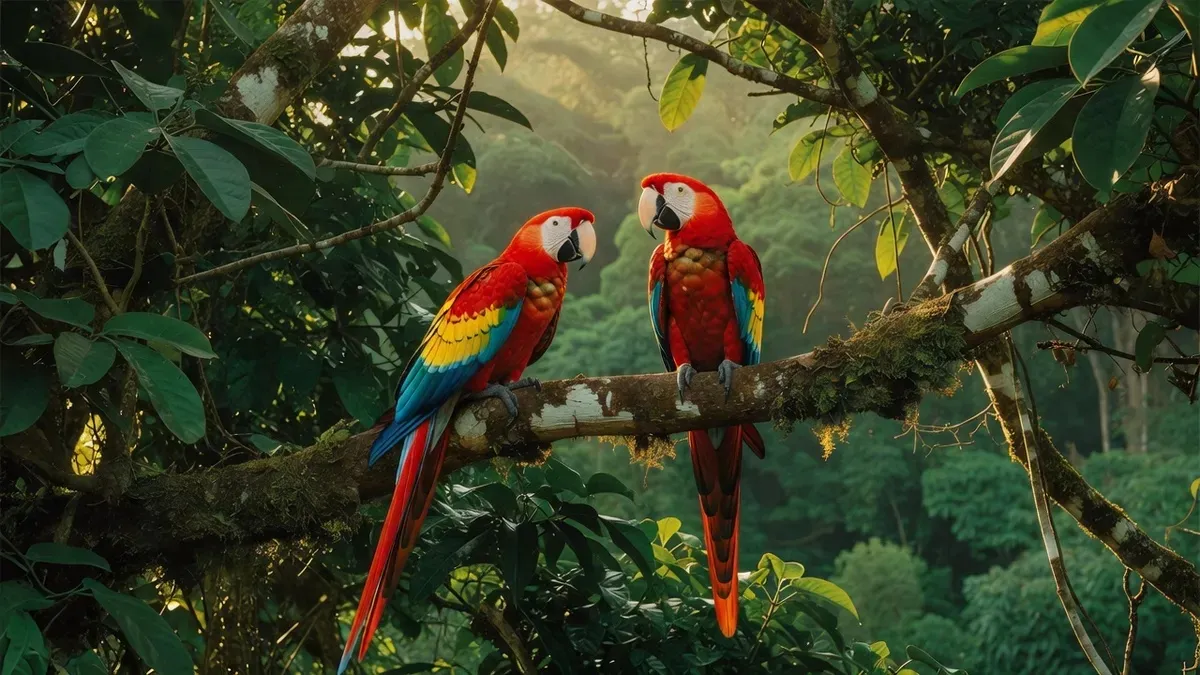
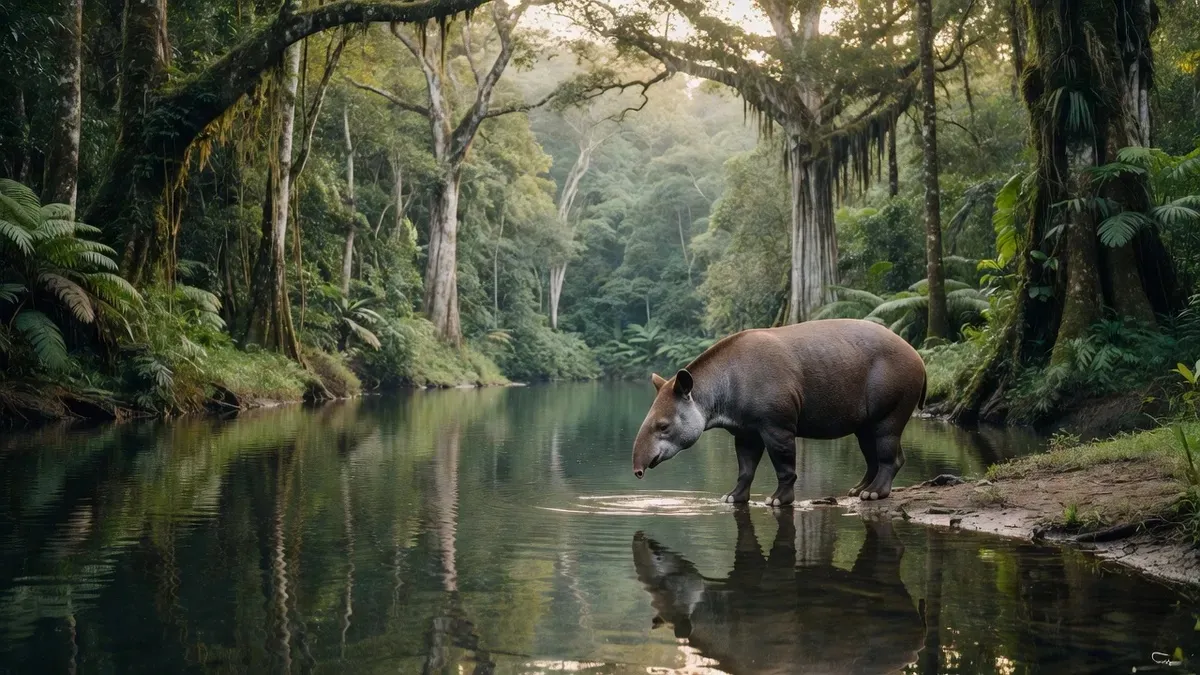
Howler monkeys crash through the canopy, Baird's tapirs wade the river mouth at dawn, and scarlet macaws streak overhead in pairs, and the Osa Peninsula's primary rainforest moves at its own relentless pace. All corcovado national park tours depart by boat with a naturalist guide registered with ACOSA, include the park entrance fee, and put you inside Costa Rica's wildest lowland forest.
Corcovado National Park can only be entered with a guide registered with ACOSA, and every tour on this page arrives by boat with the park entrance fee included. From Drake Bay the boat to Sirena station takes about an hour and the cheapest day costs $110; San Pedrillo is only 30 to 45 minutes from Drake Bay. From Uvita or Puerto Jiménez the same day costs $170 to $185 because the crossing is longer. Operators need your passport number within 24 to 48 hours of booking.
Basing yourself in Drake Bay? Guests' top-rated rooms start at $72 a night → see hotels
Naturalist guides registered with ACOSA on every tour
Free cancellation 24 hours before on select tours
Departures from Drake Bay, Puerto Jimenez & Uvita
870+ verified traveller reviews
42,570 haLand protected inside Corcovado National Park, plus 5,375 hectares of sea (SINAC)
$110–$2,300Price range, shared day tours to a private group day
375Bird species recorded in the park, alongside 124 mammals and 71 reptiles
7am–3pmDaily station hours set by SINAC, with Sirena closed all October
302 Reviews — Top Rated Tour
Most Popular Corcovado National Park Tour
Uvita: Full-Day Trip to Corcovado San Pedrillo National Park
★★★★★★★★★★4.6(302 reviews)
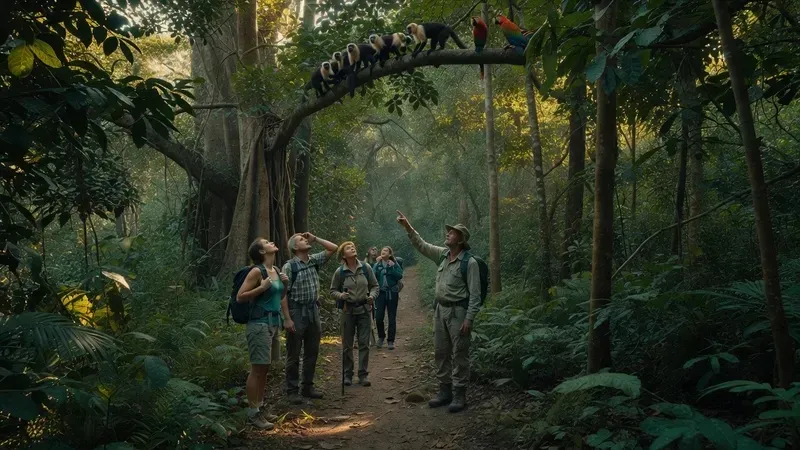
Full-day guided tour to Corcovado National Park's San Pedrillo station by speedboat from Uvita — the top-rated Corcovado day trip on GetYourGuide. A bilingual naturalist guide leads a 4-hour rainforest hike with a high-powered telescope to spot howler monkeys, scarlet macaws, tapirs, and crocodiles, followed by a picnic lunch at the station.
Distance
Boat crossing from Uvita (Playa Ballena) to San Pedrillo
These Corcovado national park tours cover every departure point and budget — from the best-value Drake Bay boat trips at $110 to fully private naturalist experiences from Uvita. Every park tour includes an ICT-certified guide, park entrance, and round-trip boat transport.
from $185Top Rated
Uvita: Full-Day Trip to Corcovado San Pedrillo National Park
★★★★★★★★★★4.6(302 reviews)· 8 hours
Full-day guided tour to Corcovado National Park's San Pedrillo station by speedboat from Uvita — the top-rated Corcovado day trip on GetYourGuide. A bilingual naturalist guide leads a…
1.5-hour Pacific boat ride — dolphins and whales possible
4-hour guided hike on San Pedrillo rainforest trails
Drake Bay: Corcovado National Park Sirena Station and Lunch
★★★★★★★★★★4.6(263 reviews)· 8 hours
Day tour from Drake Bay to Corcovado National Park's legendary Sirena Ranger Station, combining a scenic boat ride along the Osa Peninsula coast with a 5-hour guided rainforest…
Scenic boat ride along the Osa Peninsula coastline
5-hour guided hike in the heart of Corcovado
Spot tapirs, peccaries, monkeys & 100+ bird species
From Puerto Jimenez: Corcovado National Park Full-Day Tour
★★★★★★★★★★4.6(131 reviews)· 9 hours
Full-day Corcovado National Park tour from Puerto Jimenez pier, departing at 5:30 am on a 1.5-hour boat ride to Sirena Station to maximise early-morning wildlife activity. Limited to…
Drake Bay: Corcovado National Park and Sirena Station Tour
★★★★★★★★★★4.6(105 reviews)· 8 hours
Small-group day tour from Drake Bay to Corcovado National Park's Sirena Station — home to all four Central American monkey species: howler, spider, capuchin, and squirrel monkeys. A…
Only park in Central America with all 4 monkey species
Small group — max 10 participants
ICT-certified naturalist guide + hotel pickup on coast
From Uvita: Day Trip to Corcovado National Park by Boat
★★★★★★★★★★4.5(70 reviews)· 8 hours
Full-day boat excursion to Corcovado National Park from Uvita (7 am–3:30 pm), covering the San Pedrillo ranger station area for a 2–3-hour guided wildlife hike through Costa Rica's…
Uvita: Private Guided Naturalist Tour in Corcovado National Park
8 hours
Exclusive private naturalist tour of Corcovado National Park's San Pedrillo station for up to 4 guests, departing from Uvita with a private speedboat across the Pacific. Your certified…
Fully private — guide, boat & park access just for your group
Pace adapted for photography & extended wildlife stops
Humpback whale season crossings Jan–Mar & Jul–Oct
Coffee station + breakfast + lunch + water & fruits
1975Corcovado was created by decree on 31 October 1975 and later raised to the rank of law
42,570 haLand inside the park boundary, with a further 5,375 hectares of protected sea
375Bird species recorded here, the count SINAC and Costa Rica's tourism board both publish
4Monkey species: all four of Costa Rica's live in this park, howler, spider, capuchin and squirrel
Dec–AprThe dry season, when trails firm up and the boats run in calmer water
782 mHighest point in the park, above 20 km of trails at Sirena alone
Corcovado National Park — Complete Visitor Guide for Costa Rica's Osa Peninsula
Sirena Station, the Heart of Corcovado National Park
Sirena is the central station of Corcovado National Park and the place guides send anyone who wants the best odds on large mammals. SINAC lists three ways in: by air from Puerto Jiménez, currently suspended, on foot from Los Patos, 23 km and eight to nine hours, or from La Leona, 16.5 km and six to seven hours, and by sea from Drake, Puerto Jiménez and Sierpe. Day tours use the boat. From Drake Bay the run to Sirena takes roughly an hour, and the crossings from Uvita and Puerto Jiménez are longer.
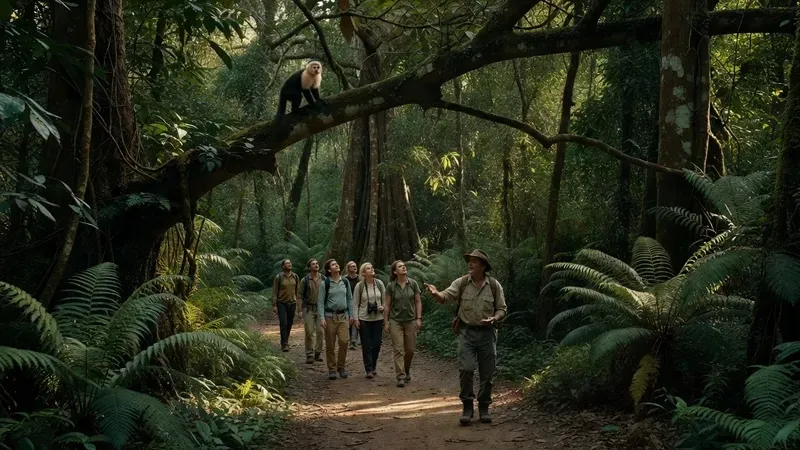
The station sits where the Río Sirena meets the Pacific, with eight trails totalling about 20 km fanning out from the clearing. Sendero Ollas covers 3 km through primary forest and is the pick for birds; Sendero Río Claro runs 3.5 km of flat ground to the river and the beach; Sendero Los Naranjos starts beside the airstrip and ends at the sand. Day groups typically walk four to five hours before lunch at the station. SINAC's own page warns that bull sharks and crocodiles can be seen at the mouth of the Río Sirena at high tide, and swimming is prohibited throughout the park.
Sirena also has services that no other sector has: drinking water, showers and toilets, lockers, a nature shop, and meals and beds by prior reservation. Those last services are run by the Asociación de Desarrollo Integral Corcovado-Carate under a use permit, which is why visitors who stay the night book the park permit and the bed in two different places. The one fixed date on the calendar is the closure: Sirena shuts for the whole of October for maintenance and because it is the wettest month of the year. If your trip falls in October, read which station suits which trip before you book anything.
San Pedrillo Station — Corcovado National Park from Uvita and Drake Bay
San Pedrillo is the northwestern sector of the park and the shortest hop of all: SINAC puts the boat from Drake Bay at 30 to 45 minutes. It can also be walked, about 10 km along the beach, but only at low tide. Departures from Uvita cross open Pacific water and take considerably longer, which is part of why the Uvita day costs more than the Drake Bay one.
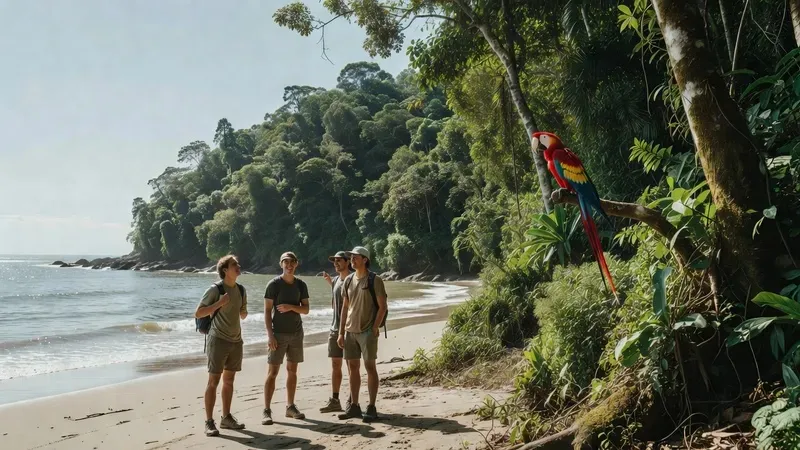
The sector has its own trail network, named for the waterfall, the Río Pargo upstream and downstream, and Llorona. Hikes run through coastal and inland forest with stream crossings, so wet feet are normal. Scarlet macaws are regularly seen around the station clearing and sloths turn up in the cecropias near the trail head, though no guide can promise either. San Pedrillo has an information post, drinking water, showers, toilets and a picnic area, and it is the sector most often chosen for a first visit because the day is shorter and the walking is gentler.
For the Uvita departures the meeting point and the passport-number request arrive by email after booking. Whichever sector you pick, the reservation is personal and non-transferable and you show your passport at the station.
Wildlife in Corcovado, Tapirs, the Four Monkey Species and the Big Cats
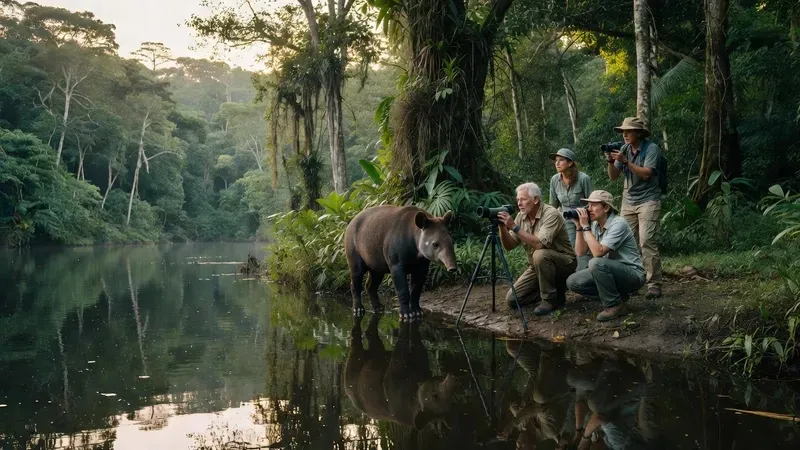
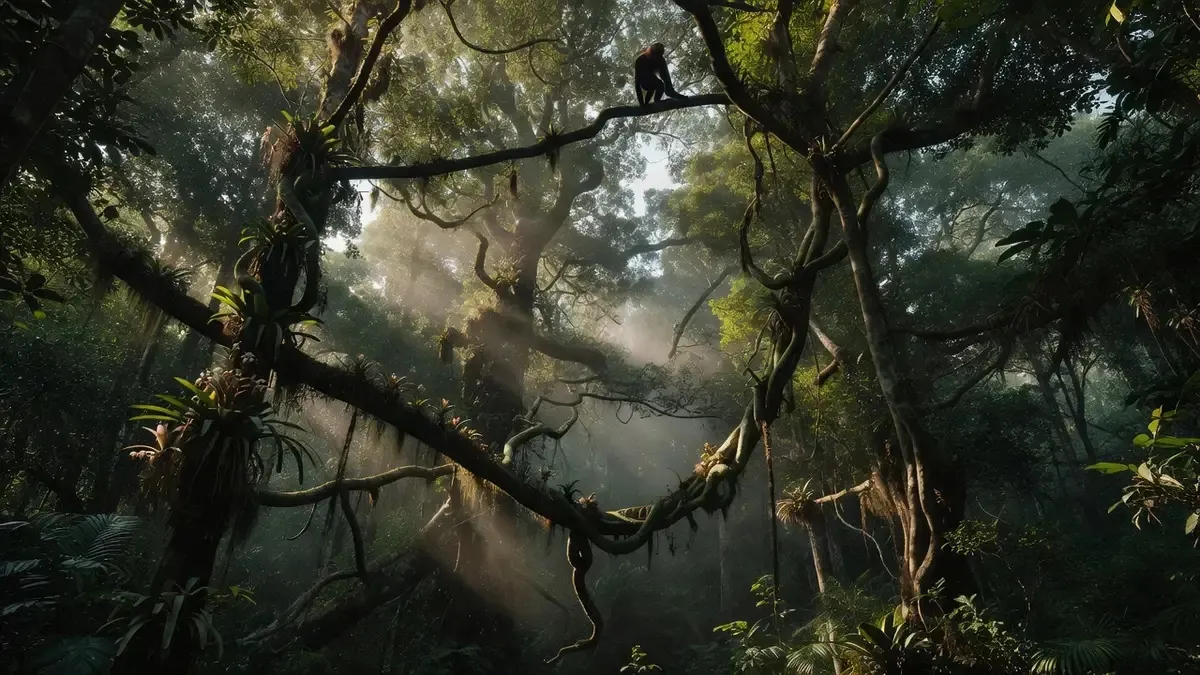
Corcovado's published species counts are 375 birds, 124 mammals, 71 reptiles and 46 amphibians. All four of Costa Rica's monkey species live here: mantled howler, Central American spider, white-faced capuchin and the small Central American squirrel monkey. Baird's tapir is the animal most visitors hope for, and the Sirena area holds the best-known concentration in the country. No one can put a number on your chances, and any site that does is guessing.
Beyond the headliners, guides look for collared and white-lipped peccaries on the forest floor, coatis around the clearings, American crocodiles and caimans in the river and lagoon, basilisk lizards on the banks, boa constrictors in riverside branches and eyelash vipers in the understorey. Birds are the reliable pleasure: scarlet macaws, toucans, trogons, motmots and hummingbirds are seen on most guided walks.
The cats are a different matter. Puma, ocelot and jaguar are all documented in the park, and SINAC names the puma as the emblematic species of the Los Planes sector, but day visitors do not see jaguars and should not plan around them. Puma sightings happen and are reported by visitors, unpredictably. Guides radio sightings to each other along the trail network, so a good find is shared, and some groups still walk out having seen monkeys, macaws and nothing larger. For what is realistic month by month, see the Corcovado wildlife guide.
Humpback Whales and Marine Life on the Boat Crossing to Corcovado
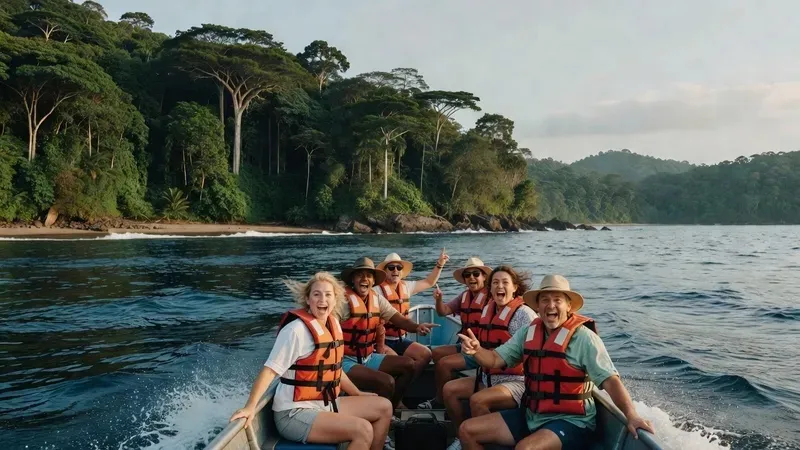
The boat crossing is part of the day. Both the Drake Bay and the Uvita routes run along the Osa coastline through open Pacific water, and dolphins are the marine animal most often reported by passengers, sometimes riding the bow wave.
Costa Rica's southern Pacific coast has two humpback seasons because whales from both hemispheres come here. Whales from the North Pacific arrive roughly December to April; whales from Antarctic waters arrive roughly July to November, the longer and better-known of the two. Uvita sits on the overlap, which is why the crossing from there has the best whale odds of the three departure points. Guides scout for blows and keep a respectful distance; sightings are never promised. The detail lives in the Osa Peninsula humpback whale guide.
Boats are open, life jackets are standard and the Uvita crossing can be choppy on a windy day. If seasickness is a concern, sit toward the rear, watch the horizon, and take anything you need well before departure.
Trails, Permits and the Rules Inside the Gate
A walk in Corcovado is slow work. The forest is dense, the guide stops constantly, and four to six kilometres can fill five hours. The park is managed by SINAC, stations open 7:00 am and close 3:00 pm, and every visit runs on a booked reservation tied to a named guide.
That is the part travellers underestimate. SINAC requires you to enter accompanied by a local guide registered with the ACOSA Sustainable Tourism Programme office before the reservation is made, and states plainly that entry to the protected area is otherwise refused. Reservations can be made up to six months ahead, are personal and non-transferable, and you present your passport at the sector you booked. That is why operators ask for passport numbers within a day or two of booking. Refund requests must be justified and lodged at least 15 calendar days before the visit, and changes are granted only for flight cancellations, illness or a park closure. The full picture is in do you need a guide for Corcovado.
The rules inside are short and enforced: stay on the marked trail, do not swim in the beaches, rivers or lagoons, do not feed, touch or harass animals, and bring no alcohol or drugs into the park. Breaking them can mean expulsion and a report to the authorities.
La Leona and Los Patos serve walkers rather than day-trippers. La Leona is entered from Carate with a 3.5 km walk along the beach, and the onward route to Sirena is 16 km and six to seven hours, with a tide-dependent crossing of the Río Claro. Los Patos is land access only, 4x4 in the dry season and tractor in the wet, crossing the Río Rincón about twenty times.
Best Time to Visit Corcovado National Park — Dry Season, Rainy Season, and Wildlife Viewing
SINAC's own climate note for the park is short: hot, rainy and very humid. The dry season runs December to April with sporadic rain, the rainy season May to November, and the heaviest rain falls in September and October. Annual rainfall is around 3,500 mm on the coast and about 5,500 mm in the hills, so the difference between the seasons is a matter of degree, not of wet against dry.
December to April is the easier time to walk. Trails firm up, the boat crossings are calmer and the early morning is when large mammals move. The green season brings louder frogs, fuller streams, greener forest and fewer people, and morning departures still get their wildlife because the rain usually arrives in the afternoon. It also brings mud, and in the wettest weeks it brings road and river problems on the inland routes.
One date is fixed: Sirena closes for the whole of October. Plan around it. Permits are capped every day of the year and the dry-season weeks sell out well ahead, so book early whichever season you choose. The month-by-month detail sits in the best time to visit Corcovado guide.
Choosing Your Entry Point, Drake Bay, Puerto Jiménez or Uvita
Corcovado is deliberately remote and there is no road to any station. Three coastal bases serve the day tours, and each reaches a different part of the park.
Drake Bay is the closest base of the three. San Pedrillo is 30 to 45 minutes away by boat and Sirena roughly an hour, which is why the cheapest guided day in the park departs from here. The village is reached by small plane from San José or by boat from Sierpe, and by road from the Rincón side, which wants high clearance in the dry season and a 4x4 in the wet. Accommodation is limited, so book the room before the tour.
Puerto Jiménez is the peninsula's main town, reachable by paved road and by scheduled small aircraft from San José. The day tour leaves the public pier before dawn for the crossing to Sirena and caps at six guests, the smallest group of any departure here. The town is also the road head for Carate and the La Leona sector.
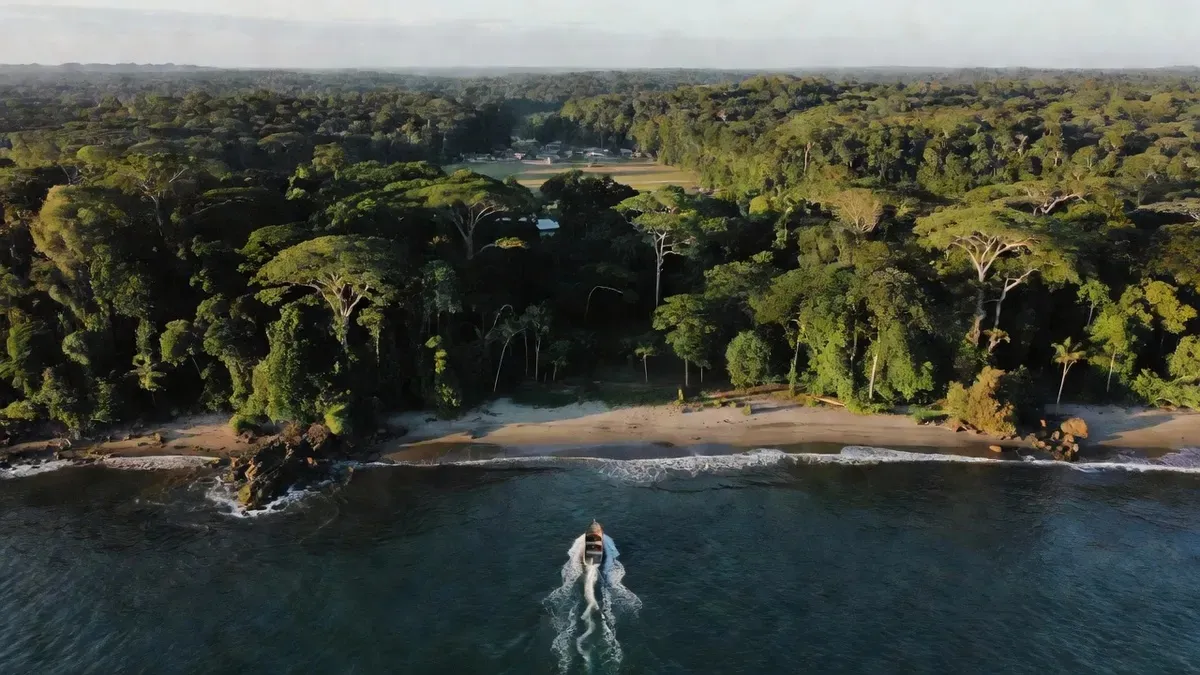
Uvita sits up the coast on the Costanera Sur and is the base for the San Pedrillo departures. The crossing is the longest of the three, and it passes through the waters of the Marino Ballena marine park, which is why the whale seasons matter more from this side. Full route detail, including the Sierpe boat and the Carate road, is in how to get to Corcovado National Park.
What SINAC Tells You to Bring
SINAC publishes its own kit list for the park, and it is a good baseline: a backpack rather than a suitcase or duffel, rubbish bags to keep gear dry and to carry your own rubbish out, hiking boots, a canteen with two litres of water per person, trail food, sunglasses, a torch, insect repellent, sunscreen and a camera.
Two additions from experience. Closed shoes are not negotiable on any station trail, and stream crossings mean your boots will get wet, so bring a second pair of socks rather than a second pair of shoes. And carry a photo of your passport as well as the document itself, since the reservation is checked against your name at the station.
The complete list, including what the operators supply and what is not allowed through the gate, is in the Corcovado packing list.
Which Corcovado National Park Tour Is Right for You?
Best value
The Drake Bay tour to Sirena with lunch is $110 per person and the shortest crossing of the three bases, which is why it takes the most bookings on this page.
Smallest group
The Puerto Jiménez full day caps at six guests. It leaves the pier before dawn, so it is on the trail while the forest is still cool and the mammals are still moving.
Wildlife photography
The private naturalist day from Uvita takes up to four guests and moves at your pace, which is the only way to wait out a tapir or a macaw pair without holding up a group.
Whales on the crossing
The Uvita departures cross the Marino Ballena marine park, where humpbacks pass roughly December to April and again July to November. Sightings happen; nobody can promise them.
Corcovado National Park — Location and Entry Points
Corcovado Through the Year, Season by Season
December to April (dry season)SINAC's dry season, with sporadic rain. Firmer trails, calmer crossings and the easiest walking. This is also when permits sell out first, so book well ahead.
December to April (North Pacific humpbacks)Whales from the North Pacific are in Costa Rican water in these months. The Uvita crossing has the best odds of the three departure points.
May to November (green season)SINAC's rainy season. Rain usually arrives in the afternoon, after most day groups are back at the station. Louder frogs, greener forest, muddier trails, fewer people.
July to November (Antarctic humpbacks)The second and longer whale window, when humpbacks from Antarctic waters reach the southern Pacific coast.
September and October (wettest)SINAC records maximum rainfall in these two months, and Sirena closes for the whole of October for maintenance. Plan around that closure.
What Travelers Say About Corcovado National Park Tours
★★★★★★★★★★
The density of wild life you can see in the rainforest is absolutely beyond anything I've seen before. You only need to look at one small patch on the ground and you'll see movement.
Drake Bay: Corcovado National Park Sirena Station and Lunch
Martin · United Kingdom
★★★★★★★★★★
We saw a puma, which I understand is rare to see, a foraging Coati who came really close, Scarlet Macaws, reptiles and lots of insects. Our guide made it fun and entertaining for our children aged 8 and 7.
Uvita: Full-Day Trip to Corcovado San Pedrillo National Park
Russ · United Kingdom
★★★★★★★★★★
Geovani was very knowledgeable and interesting, took pictures through his scope for us, spoke very good English, and loved his job. We saw coatis, caimans, macaws, toucans, howler, spider and squirrel monkeys.
From Puerto Jimenez: Corcovado National Park Full-Day Tour
Karen · Canada
★★★★★★★★★★
We stopped to see a momma and baby humpback whale and an Olive Ridley turtle on the crossing. Then we saw macaws, a tapir, coatis, anteaters, howler monkeys, a sloth, and a crocodile in the lagoon next to the station.
From Uvita: Day Trip to Corcovado National Park by Boat
Sarah · United States
Why Book a Guided Corcovado Day Rather Than Arranging It Yourself
You cannot walk in alone
SINAC requires a guide registered with the ACOSA Sustainable Tourism Programme office, named on the reservation before it is made. Turn up without one and entry is refused.
The permit is the hard part
Reservations are capped daily, personal, non-transferable, and checked against your passport at the station. Booked tours handle the permit and ask for your passport number after you book.
375 birds, 124 mammals
Those are the counts published for the park, alongside 71 reptiles and 46 amphibians, and all four of Costa Rica's monkey species. A guide with a scope is what turns the list into sightings.
Three entry points, one park
Drake Bay is closest, with San Pedrillo 30 to 45 minutes away and Sirena about an hour. Puerto Jiménez runs the small-group Sirena day. Uvita adds the whale-season crossing.
Timing you cannot see from abroad
Stations run 7:00 am to 3:00 pm, Sirena closes for all of October, and the beach and river routes depend on tides. Operators build the day around all three.
Entry, boat and lunch in the price
The park fee of $16.95 for a non-resident adult, the boat, the guide and a hot lunch at the station are already inside the day-tour prices here.
What Guides Look For on a Corcovado Walk
🐾Baird's TapirEndangered, and the Sirena area holds the best-known concentration in Costa Rica. Guides work the riverbanks at first light. Nobody can put odds on it.
🦜Scarlet MacawUsually heard before it is seen, in pairs over the coastal forest at both San Pedrillo and Sirena. The most reliable of the headline species.
🐾All Four Monkey SpeciesMantled howler, Central American spider, white-faced capuchin and squirrel monkey, every monkey species Costa Rica has. Most groups see two or three of them.
🐊American CrocodileSeen on riverbanks near Sirena and in the lagoon beside San Pedrillo. SINAC warns that crocodiles and bull sharks can appear at the Río Sirena mouth at high tide.
🐾Puma and OcelotBoth documented in the park; SINAC names the puma as the emblematic species of the Los Planes sector. Sightings are rare, unpredictable and never part of the plan.
🐋Humpback WhaleRoughly December to April from the North Pacific and July to November from Antarctic waters, on the boat crossing rather than in the park.
Where to Stay in Drake Bay
Drake Bay is the closest base to the park, about an hour by boat from Sirena and half that from San Pedrillo, and the village fills up through the dry season.
Hotel Margarita
9.2/10
Drake Bay village · in the village · 116 Expedia reviews
Rated 9.2/10 across 116 Expedia reviews, the largest review count in the village here
Pool on site, and listed as fully refundable when we checked
We have not stayed at these places. Guest scores, review counts and nightly rates are what Expedia listed for a midweek night in September 2026, checked on 1 August 2026. Drake Bay is small and the good rooms go first from December through April.
Corcovado National Park Tours — Frequently Asked Questions
How do I book a Corcovado National Park tour in advance?
Book through the links on this page, then send the operator your full name and passport number, which every operator asks for within 24 to 48 hours because SINAC ties each reservation to a named visitor and a named guide. Reservations can be made up to six months ahead, they are personal and non-transferable, and your passport is checked at the station. Dry-season dates from December to April go first, and the six-guest Puerto Jiménez departure is usually the first to fill.
Can you enter Corcovado National Park without a guide?
No. SINAC requires every visitor to enter accompanied by a local guide registered with the ACOSA Sustainable Tourism Programme office, named on the reservation before it is made, and states that entry is otherwise refused. That applies to every sector, including the walking routes. Why the rule exists and how a guide gets on the register is explained in do you need a guide for Corcovado.
How much is the Corcovado National Park entrance fee?
$16.95 per day for a non-resident adult and $5.65 for a child aged 2 to 11, tax included. Costa Rican nationals and residents pay ₡1,808 and ₡565, and under-2s and residents aged 65 and over go free. The fee is per person, per day, per sector, and it is already inside every price on this page. What a day really costs once the guide and the boat are counted is in the Corcovado entrance fee guide. Last verified: August 2026.
Can you stay overnight inside Corcovado National Park?
Yes, at Sirena. Beds, meals, lockers and the nature shop there run under a use permit held by the Asociación de Desarrollo Integral Corcovado-Carate, so the park permit and the bed are booked in two different places. A night buys the dawn and dusk hours that day groups miss, and it costs a second day of park entry. We weigh it up in a Corcovado day trip versus a night at Sirena.
What is the best time to visit Corcovado National Park?
SINAC's dry season runs December to April with sporadic rain, and that is the easier time to walk. The rainy season is May to November, with the heaviest rain in September and October, and Sirena closes for the whole of October for maintenance. Green-season mornings still deliver wildlife because the rain tends to come in the afternoon. Month by month, see our best time to visit Corcovado guide.
What wildlife can I see in Corcovado National Park?
The park's published counts are 375 birds, 124 mammals, 71 reptiles and 46 amphibians, and all four of Costa Rica's monkey species live here. Commonly seen on guided walks: monkeys, scarlet macaws, toucans, coatis, crocodiles, caimans and basilisk lizards. Less often: Baird's tapir, anteaters, sloths and, very rarely, a puma. Day visitors do not see jaguars. Nothing is guaranteed, and some groups walk out having seen only birds and monkeys. The realistic picture is in our Corcovado wildlife guide.
How long is the boat from Drake Bay into the park?
SINAC puts the Drake Bay boat to San Pedrillo at 30 to 45 minutes; the run to Sirena is roughly an hour, longer in rough water. Both Drake Bay departures leave from the village beach, and the village itself is reached by small plane from San José, by boat from Sierpe, or by road from the Rincón side with high clearance. Route by route, everything is in how to get to Corcovado National Park, and the Drake Bay day tour guide has the full itinerary.
Which entrance or station should I choose?
Drake Bay reaches San Pedrillo in 30 to 45 minutes and Sirena in about an hour. Puerto Jiménez runs the six-guest Sirena day from the public pier. Uvita crosses to San Pedrillo on the longest run, through whale water. La Leona and Los Patos are for walkers, not day trips, and Sirena closes for all of October. We compare all of them in Corcovado ranger stations compared, and the Puerto Jiménez tour guide covers the small-group day.
What should I wear and bring to Corcovado National Park?
Closed hiking boots, light long sleeves, rain layer, insect repellent, sunscreen, a torch and two litres of water per person, which is the amount SINAC itself recommends. It also asks for a backpack rather than a duffel and rubbish bags to carry your own waste out. Sandals will not get you past a ranger. The full list is in our Corcovado packing list.
Is Corcovado National Park suitable for families with children?
Families do these tours, and reviewers report seven and eight-year-olds finishing the San Pedrillo walk comfortably. Be realistic about the shape of the day: six to nine hours door to door, two to four hours of walking, and an open boat that can be choppy. Children walk the trails themselves and follow the same rules as everyone else, no touching wildlife and no leaving the path. The Uvita San Pedrillo day and the Drake Bay Sirena day suit families best; the private day sets its own pace.
Where should I stay for Corcovado tours?
Drake Bay is the practical base: the boat to San Pedrillo is 30 to 45 minutes and Sirena about an hour, against a much longer run from Uvita or Puerto Jiménez. The village is small, mostly guesthouses and lodges, and Expedia guests rate several of them 9.2/10 or better with rooms from around $72 a night. Staying there also puts you on the cheapest departure. See three of the best-reviewed in where to stay in Drake Bay.
What is Sirena Ranger Station and can you visit it?
Sirena is the central station of the park, reached by boat or a long walk and only with a registered guide, and it has the widest trail network at about 20 km. Permits, daily caps, the October closure and the overnight concession are explained on the Sirena Ranger Station page.
Ready to explore Corcovado National Park? Book with free cancellation.
 from $185
Top Rated
from $185
Top Rated