Humpback Whales on the Osa Peninsula, Costa Rica — Two Seasons, Best Viewing Spots

The Osa Peninsula has one of the most unusual whale-watching situations in the world: humpback whales from two different ocean hemispheres visit the same waters in the same year. Whales from the North Pacific arrive roughly December to April. Whales from Antarctic waters arrive roughly July to November. The result is that the Pacific waters off Uvita and the Osa coastline have humpback whales present for roughly six months of every year — more than almost any other whale-watching destination globally. The whales come to calve and nurse their young in the protected, warm waters between the Osa Peninsula and Isla del Caño Biological Reserve. These aren't feeding whales passing through — they are here specifically to give birth and nurse, which means the behaviours you observe (breaching, tail-slapping, mother-calf pairs) are spectacular and the stays are extended over weeks rather than days. This guide explains both whale seasons, where to watch from the Osa, and how a Corcovado boat tour from Uvita doubles as whale watching — passing through the prime calving grounds on both legs of the crossing.
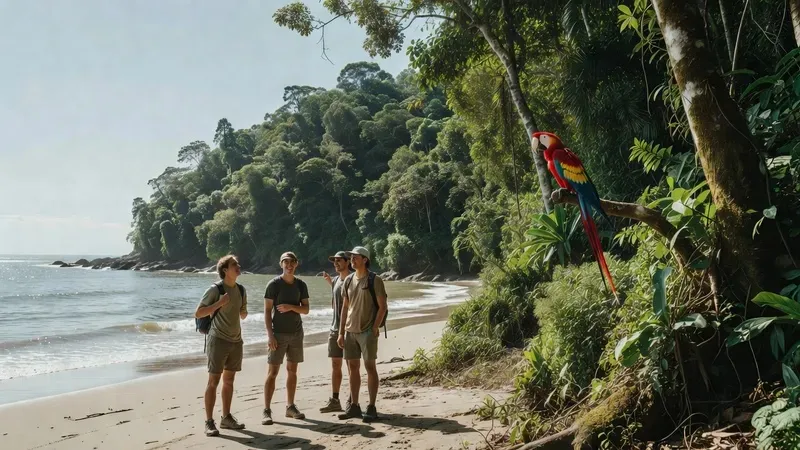
Humpback Whale Viewing — Quick Reference
December to April: Northern Hemisphere humpbacks from North Pacific
July to November: Southern Hemisphere humpbacks from Antarctica (larger numbers)
Uvita — Marino Ballena waters and the open Pacific toward Isla del Caño
Uvita to San Pedrillo crossing passes directly through calving grounds
Calm morning seas — Corcovado tours depart at 6:30 am in optimal conditions
Uvita Day Trip to Corcovado — boat-focused tour through whale territory
Book a Corcovado Tour from Uvita — Check Whale Season Dates
The Uvita day trip to Corcovado by boat is the best way to combine Corcovado National Park with a whale-watching crossing. Departs at 7 am, reaches San Pedrillo for a 2–3 hour guided hike, and returns by 3:30 pm. Free cancellation up to 24 hours before.
The Two Annual Whale Seasons on the Osa Peninsula
Season one, December to April: whales from the North Pacific
Between December and April, humpback whales from the North Pacific — the same population that feeds in Alaska and the Pacific Northwest during summer — migrate south along the Pacific coast of Costa Rica and into the warm waters off the Osa Peninsula. These whales travel 8,000–10,000 km from their feeding grounds to give birth and nurse their calves in the protected coastal waters between the Osa and Isla del Caño.
The December to April window overlaps with the dry season on the Osa — the best trail conditions for Corcovado, the calmest Pacific seas, and the clearest visibility for whale watching. That combination makes the middle of this window the easiest time to pair a Corcovado tour with whale sightings on the Uvita boat crossing.
- Peak reported months: February and March, when the dry-season Pacific is calmest
- Population: North Pacific humpbacks migrating from Alaska/Pacific Northwest feeding grounds
- Typical behaviours: mother-calf pairs nursing, breaching, pec slapping, tail lobbing
- Sea conditions: calm dry-season Pacific — best visibility and most comfortable crossing
Season two, July to November: whales from Antarctic waters
The second and longer whale season on the Osa Peninsula runs from July through November, when humpback whales from Antarctica migrate north along the South American coast and across to Costa Rica. Southern Hemisphere humpbacks are more numerous than their northern counterparts in these waters — the Osa Peninsula is one of their primary calving destinations in the entire Eastern Pacific.
The July to November window coincides with the rainy season on the Osa, when forests are lush and trails are muddy. Morning Corcovado tours still operate normally (the rain typically arrives in the afternoon), and the combination of whale activity on the boat crossing and the green, vivid rainy-season forest at San Pedrillo makes this a genuinely compelling time to visit. All whale season Corcovado boat tours from Uvita cross through prime whale territory on both legs.
- Peak months: August and September — highest Southern Hemisphere whale concentration
- Population: Antarctic humpbacks — larger numbers than the Northern Hemisphere season
- Typical behaviours: more active surface behaviour than December to April season overall
- Sea conditions: rainy-season Pacific can have larger swells — take precautions if sensitive to motion
What to Expect — Sighting Rates and Behaviours
Humpback whale sightings on the Uvita boat crossing are common but not guaranteed. Based on operator reports, sighting rates during peak whale season (February–March and August–September) run at approximately 60–70% on the Corcovado boat crossings. This is not a dedicated whale-watching tour with a captain whose sole focus is finding whales — but both the guide and the boat driver actively watch for blows during the 90-minute crossing.
When whales are seen, encounters typically last 5–15 minutes. Mother-calf pairs often rest near the surface and are patient subjects for photography. Breaching is dramatic and can be photographed if you're ready — the guide will alert the group when a blow is spotted.
- Sighting rate: approximately 60–70% on the Uvita crossing during peak whale months
- Typical encounter: 5–15 minutes observing a whale or mother-calf pair
- Common behaviours: surfacing to breathe, fluke raise before deep dive, occasional breaching
- Photography: 300mm+ zoom recommended — whales surface unpredictably, stay ready
Uvita — The Best Base for Osa Peninsula Whale Watching
Marino Ballena National Park — The Whale Sanctuary
Uvita sits at the entrance to Marino Ballena Marine National Park — a protected marine area named for its distinctive whale-tail shaped sandbar. The park encompasses the calving and nursing grounds where Osa humpbacks are most concentrated, and dedicated whale-watching tours depart from Uvita marina daily during both whale seasons.
The Corcovado boat tour from Uvita exits through Marino Ballena's protected waters on its way to San Pedrillo — making every Corcovado tour from Uvita a de-facto marine wildlife transit through the park's core whale zone. You don't need to choose between Corcovado and whale watching when departing from Uvita — both happen in the same morning.
- Marino Ballena National Park: the primary whale calving sanctuary on the Osa coast
- Uvita sandbar: the famous whale-tail shaped sandspit visible from the air and on foot
- Dedicated whale tours: available from Uvita marina — 2–3 hours, focused on marine wildlife
- Combined option: Corcovado boat tour naturally crosses through Marino Ballena waters
Isla del Caño — Whale and Dolphin Hotspot
Isla del Caño Biological Reserve, 20 km offshore from Drake Bay, is one of the most productive marine wildlife destinations on Costa Rica's Pacific coast. Humpback whales frequent the waters between the Osa and Isla del Caño during both annual windows, and dolphin species (bottlenose, spotted, spinner) are present year-round in large pods.
Snorkelling tours to Isla del Caño from Drake Bay or Uvita pass through the same whale territory as Corcovado boat crossings. If your primary interest is whale watching rather than Corcovado hiking, a dedicated Isla del Caño snorkel and wildlife tour from Drake Bay or Uvita gives more focused marine time with a guide whose primary task is finding marine wildlife.
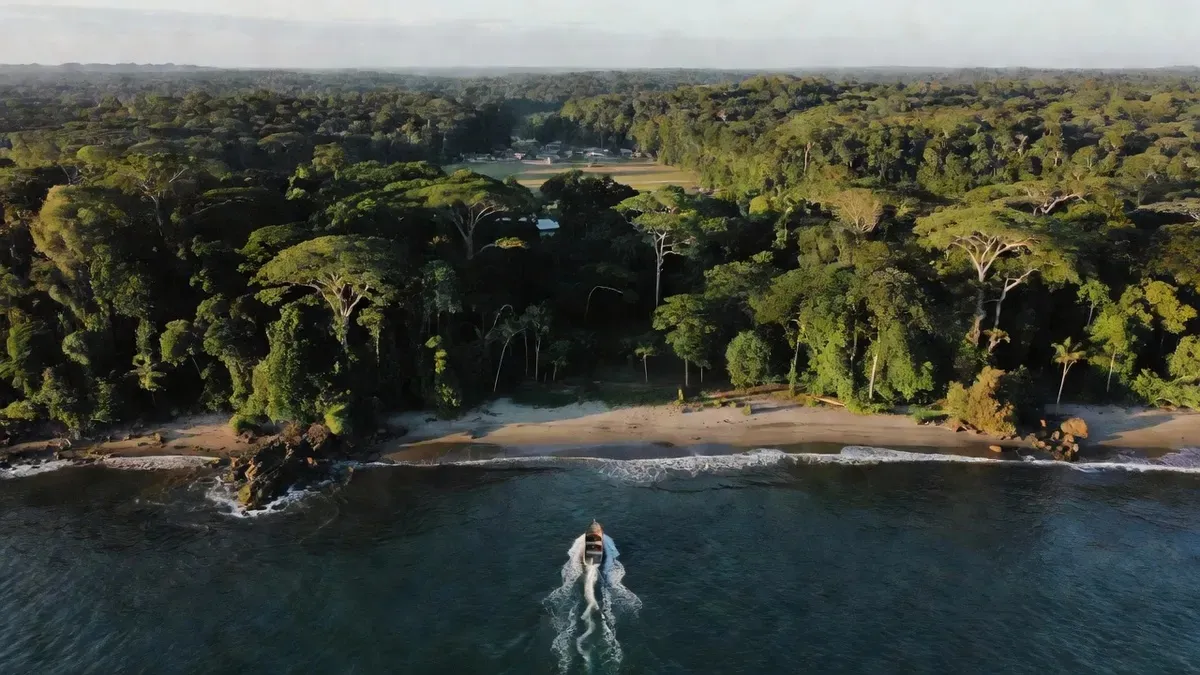
Practical Information for Whale Watchers
Best Time of Day for Whale Sightings
Humpback whales on the Osa are most active in the morning hours — the same window that Corcovado boat tours exploit for wildlife purposes. The 6:30 am departure from Uvita reaches peak whale activity time during the 90-minute crossing, typically arriving at San Pedrillo around 8:00 am. Return crossings in the early afternoon are also productive, as whales continue to surface through midday during calm conditions.
Calm sea conditions dramatically improve sighting probability — glassy morning seas allow you to see a blow from 1–2 km away. Rainy-season swells (August–September) make it harder to spot a surfacing animal from distance, though close encounters are still reported when whales are directly on the route.
- Best time: early morning departures (6:30–7:00 am) — whale activity peaks at dawn
- Sea conditions: calm seas = better blow visibility; rough conditions reduce effective sighting distance
- Both directions: the outbound crossing and return crossing both cross whale territory
- Don't focus only on whales: dolphin pods, sea turtles, and seabirds are present all crossing
Who the Uvita Boat Tour Is For
The Uvita day trip to Corcovado is designed for travellers who want both marine wildlife and rainforest wildlife in a single day. It's the best option for those who are sensitive to the idea of spending 8 hours entirely in a forest — the 90-minute boat crossing and the 2–3 hour hike at San Pedrillo balance time at sea with time in the forest.
- Not suitable for: guests with serious sea sickness — 90-minute Pacific crossing each way
- Not suitable for: children under 8 — combined boat and hike duration is demanding
- Ideal for: marine wildlife enthusiasts, whale watchers, travellers wanting sea + forest in one day
- Duration: 6–7 hours total including both crossing legs and the San Pedrillo hike
What to Bring for Whale Watching on the Crossing
Whale photography on the open Pacific requires specific preparation — the lighting and distance differ significantly from forest wildlife photography.
- Telephoto lens: 300–500mm minimum for whale photography — animals surface at distance
- Fast shutter speed: 1/1000s or faster to freeze a breach without motion blur
- Dry bag: essential — salt spray on a 90-minute open Pacific crossing reaches everything
- Polarised sunglasses: reduce surface glare and dramatically improve whale-spotting ability
- Sea sickness medication: take before departure, not after symptoms begin
Humpback Whales on the Osa Peninsula — Frequently Asked Questions
Why does the Osa Peninsula have two whale seasons?
The Osa Peninsula's position in the Eastern Tropical Pacific places it on the migration route of both Northern Hemisphere humpbacks (which feed in Alaska and the Pacific Northwest) and Southern Hemisphere humpbacks (which feed in Antarctica). Both populations migrate to the same warm calving grounds off Costa Rica, but at opposite times of year — Northern Hemisphere whales in Costa Rica's dry season (December to April), Southern Hemisphere whales during the rainy season (July to November).
Is a Corcovado boat tour a good way to see humpback whales?
Yes — the Uvita to San Pedrillo crossing passes through the primary whale calving area. It's not a dedicated whale-watching tour (the guide's primary role is Corcovado naturalist, not marine wildlife specialist), but sighting rates during peak whale months are approximately 60–70%. For a dedicated whale focus, a Marino Ballena or Isla del Caño wildlife tour gives more targeted marine time with a marine-specialist guide.
Which whale season is better — December to April or July to November?
The July to November season (Southern Hemisphere whales) typically has larger numbers off the Osa Peninsula. The December to April season (Northern Hemisphere whales) coincides with better sea conditions (dry season, calmer Pacific) which makes spotting easier. For combining whale watching with Corcovado, December to April is the most comfortable time — dry trails, calm seas, and active Northern Hemisphere whales. For sheer whale numbers, August–September delivers the peak.
Can you see whales from the shore near Uvita?
Yes — during peak whale season, humpbacks surface close enough to the Marino Ballena coastline to be seen from shore. The whale-tail sandbar at Uvita is a popular whale-watching viewpoint during the July to November season, when whales occasionally come into the shallow bay. A boat, however, gets you significantly closer — a boat-based sighting at 50–100 metres is incomparable to a shoreline observation at 500 metres.
Do dolphins also follow the whale seasons?
No — bottlenose dolphins are year-round residents of the Osa Peninsula waters and are seen on Corcovado boat crossings in every month. Spotted dolphins and spinner dolphins are also present regularly. Dolphin encounters on the Uvita crossing are common regardless of season — the whale seasons are additive, not replacing the year-round dolphin activity.