Corcovado National Park Packing List — Complete Guide for Day Tours and Overnight Visits
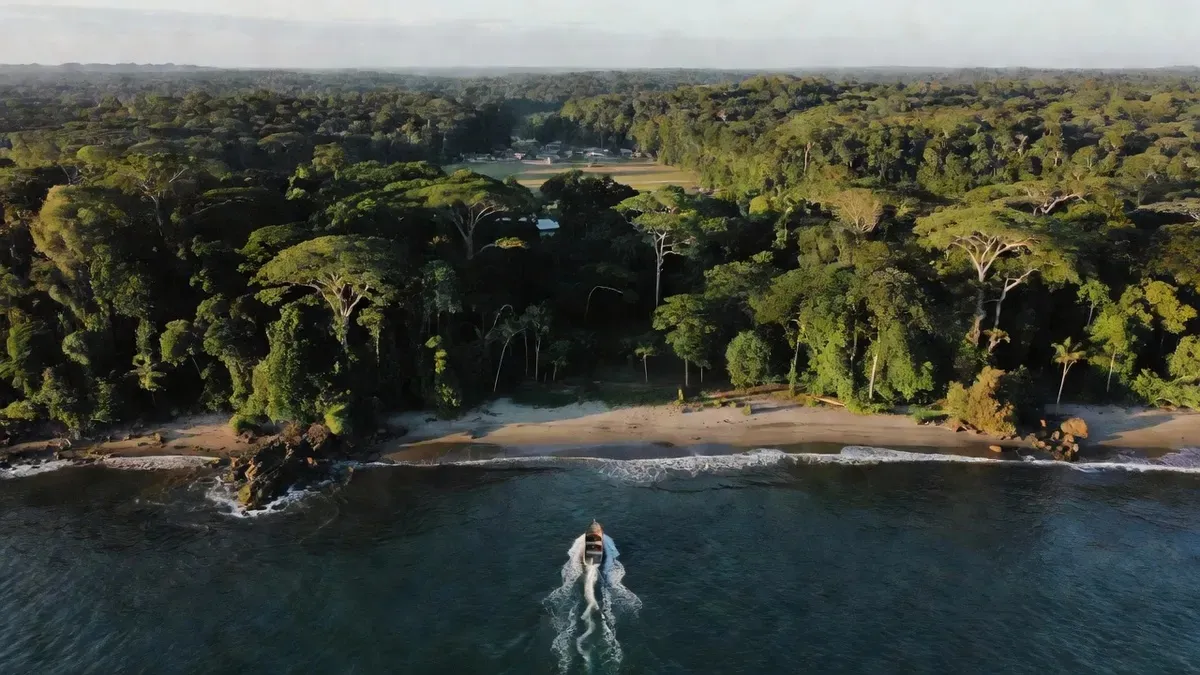
Corcovado National Park's remote location on the Osa Peninsula means you can't rely on shops or facilities inside the park. Every item you bring matters — good footwear prevents falls on muddy trails, the right insect repellent means you notice the tapir instead of the mosquitoes, and a dry bag separating your electronics from Pacific boat spray can save a camera worth a thousand dollars. This packing list is based on what guides and experienced visitors recommend specifically for Corcovado — not a generic jungle list, but one tailored to the park's combination of primary forest hiking, open Pacific boat crossings, and strict conservation rules that prohibit several common items (chemical sunscreen, single-use plastics, drones). The list is split into mandatory items, strongly recommended items, and what you do not need to bring because the tour already provides it.
What the Tour Already Includes
Full meal, water, and fresh fruit included — no need to pack food
Guide provides HD scope for canopy wildlife — personal binoculars still useful
Entry fees and Corcovado permits handled by the operator
To and from the park — life jackets provided on board
Certified ICT guide with local knowledge — no separate guide fee
Included within Puerto Jimenez — confirm your address at booking
Check Availability — Puerto Jimenez Small-Group Tour
Booking the right tour is the first item on any Corcovado packing list. This small-group tour (max 6 guests) from Puerto Jimenez includes gear guidance, park entry, and lunch. Free cancellation up to 24 hours before means you can hold your date while finalising preparations.
Mandatory Items — Do Not Visit Without These
Footwear — The Most Important Decision
The park does not permit sandals, flip-flops, or open footwear on the trails. Closed-toe waterproof footwear is mandatory — and the choice between rubber boots and waterproof hiking shoes is the most important gear decision for a Corcovado visit.
Rubber boots are the local standard and are available for rent at lodges near Uvita, Drake Bay, and Puerto Jimenez for $3–5 per day. They are ideal for the rainy season (May–November) when trails are deeply muddy and stream crossings are frequent. Waterproof hiking shoes work well in the dry season (December–April) when trails are firmer, and are more comfortable for the 4–5 hours of walking.
If you're visiting in the rainy season, rent rubber boots at your lodge before the tour departure — don't rely on the operator to provide them.
- Dry season (December–April): waterproof hiking shoes recommended — more comfortable for long hikes
- Rainy season (May–November): rubber boots strongly recommended — rent locally for $3–5/day
- Not permitted: sandals, open-toe shoes, or flip-flops — no exceptions
- Socks: wool or synthetic wicking socks that come above the boot top — prevents chafing
Dry Bag for Electronics and Documents
The boat crossing from Uvita, Drake Bay, or Puerto Jimenez involves open Pacific water where spray is inevitable. A dry bag protects cameras, phones, passports, and cash from saltwater. A 10-litre roll-top dry bag is sufficient for a day tour — lightweight, packs flat, and can double as a rain cover for your daypack on the trail.
- Recommended size: 10–15 litres for a day tour — enough for camera, phone, and documents
- What to store inside: camera, phone, passport copy, cash, extra lenses
- Alternative: individual waterproof phone case + waterproof camera bag — same protection
- Where to buy: available at outdoor shops in Quepos or online before travel
Mineral Sunscreen — Chemical Sunscreen Is Prohibited
This is the rule that surprises most visitors: chemical sunscreen (containing avobenzone, oxybenzone, homosalate, or octinoxate) is prohibited inside Corcovado National Park. The restriction exists because these compounds damage the freshwater lagoon ecosystem at Sirena, where crocodiles, fish, and other wildlife depend on the water quality.
Only mineral sunscreen (zinc oxide or titanium dioxide) is permitted. Bring it from home — mineral sunscreen is not reliably available in Uvita or Drake Bay shops, and what is available is expensive.
- Prohibited: avobenzone, oxybenzone, homosalate, octinoxate — check your label
- Permitted: zinc oxide or titanium dioxide — fully reef-safe and park-compliant
- Where to buy: before travel — stock in Uvita and Drake Bay is unreliable
- UV clothing: a long-sleeved rash guard or UPF 50 shirt reduces how much sunscreen you need
Strongly Recommended Items
Insect Repellent (DEET)
The rainforest in Corcovado has biting insects — mosquitoes, sand flies (puri-puris), and horse flies are present year-round, with higher intensity in the rainy season. DEET-based repellent at 30–50% concentration is the most effective option and is safe for use outside the park's protected water bodies. Apply before the boat crossing, reapply after the crossing and before the hike.
Bring repellent from home — quality varies enormously in local shops, and some formulations sold in tourist areas are low concentration and ineffective. Picaridin is an alternative to DEET that is odour-free and less likely to damage plastics and camera coatings.
- Recommended: DEET 30–50%, or Picaridin 20% for those who prefer DEET alternatives
- When to apply: before boat boarding, before entering the forest — insects are worst near the lagoon
- Bring from home: local supply is unreliable and often low-concentration
- Long sleeves: a lightweight long-sleeved shirt dramatically reduces the exposed surface area
Camera Gear — What Actually Works in the Forest
Primary forest wildlife photography is challenging — subjects are in the upper canopy, light levels under the canopy are low, and animals move fast. The right gear makes the difference between a record shot and a publishable photo.
- Telephoto lens: 100–400mm or 200–500mm zoom for canopy wildlife — essential
- Fast aperture: f/2.8 or f/4 for low-light forest — slow zooms struggle under the canopy
- Fast shutter: 1/500s or faster to freeze monkey and bird movement
- Image stabilisation: critical for long lens handheld shots
- Extra batteries and memory cards: no charging inside the park
- Rain cover: a plastic bag over the camera on the boat crossing is sufficient
Personal Binoculars
The guide provides a spotting scope for group viewing, but personal binoculars allow you to scan independently while the guide positions the scope elsewhere. In a park where 80% of wildlife is in the upper canopy, binoculars convert possible sightings into confirmed ones. Minimum 8x42 — compact enough for the trail, powerful enough to resolve detail at 30+ metres height.
- Recommended: 8x42 or 10x42 binoculars — compact and powerful
- Minimum: 8x magnification for useful canopy views
- Weight: carry around your neck, not in a pack — wildlife appears suddenly and briefly
- Budget option: 8x42 binoculars under $150 work well for Corcovado conditions
What Not to Bring — Prohibited Items
Items Prohibited Inside Corcovado National Park
Corcovado has some of the strictest conservation rules in Costa Rica's national park system. These rules are enforced at the park entrance and throughout your hike by your guide.
- Single-use plastic: no plastic water bottles, plastic bags, plastic packaging, or disposable cutlery
- Chemical sunscreen: avobenzone, oxybenzone, and related chemical UV filters are prohibited
- Drones: unmanned aerial vehicles are prohibited in all of Costa Rica's national parks
- Weapons: no firearms, knives, machetes, or any bladed instrument (your guide carries the necessary tools)
- Alcohol and tobacco: prohibited inside the park boundary
- Pets: no animals allowed inside the park
- Feeding wildlife: prohibited — do not bring food that could be accessed by animals in the park
What You Don't Need to Carry
Because the tour includes lunch, water, park entry, and the guide's scope, you do not need to overpack. A light daypack of 15–20 litres is sufficient for a day tour. Heavy overnight packs, large tripods, and unnecessary clothing changes add weight and slow your movement on the trail.
Check what each of the Corcovado National Park tours includes so you know exactly what to leave at the lodge.
- Leave behind: food and full water bottles — provided by the tour
- Leave behind: heavy tripod — guide's scope is more practical on forest trails
- Leave behind: extra clothing changes — a dry bag layer over your pack handles rain
- Leave behind: bulky guidebooks — your guide provides real-time expert interpretation
Corcovado Packing List — Frequently Asked Questions
Are rubber boots better than hiking shoes for Corcovado?
In the rainy season (May–November), rubber boots are strongly recommended — trails at Sirena and San Pedrillo are deeply muddy and stream crossings can be knee-deep. In the dry season (December–April), waterproof hiking shoes are more comfortable for the 4–5 hours of walking and are usually sufficient. If you're unsure, rent rubber boots at your lodge in Drake Bay, Uvita, or Puerto Jimenez for $3–5 per day.
Why is chemical sunscreen prohibited in Corcovado?
Chemical UV filters (avobenzone, oxybenzone, homosalate, octinoxate) are toxic to freshwater and marine ecosystems when washed off during river crossings or contact with the park's lagoons. Corcovado protects the watershed of multiple rivers and the Sirena lagoon, where crocodiles, fish, and amphibians depend on clean water. Only mineral sunscreen — zinc oxide or titanium dioxide — is permitted and should be applied before entering the park.
Can I rent equipment near Corcovado?
Rubber boots are available for rent at most lodges near Uvita, Drake Bay, and Puerto Jimenez ($3–5/day). Binoculars are sometimes available at lodges but quality varies. Dry bags are occasionally sold at Uvita's outdoor shops. Everything else on this list — mineral sunscreen, DEET repellent, camera gear — should be brought from home or purchased in San José before reaching the Osa Peninsula.
Do I need to carry my own water on the Corcovado tour?
No — water is included in all guided tours. The operator provides water and beverages at the ranger station and may carry water on the trail as well. A personal reusable water bottle is useful for having water during the hike itself, but you do not need to fill and carry a full supply from home.
Is a daypack enough or do I need a large backpack?
A 15–20 litre daypack is more than sufficient for a day tour — the tour includes food, water, and all technical equipment. The lighter you pack, the more comfortable the 4–5 hour forest hike will be. A large 50-litre hiking pack is unnecessary and adds weight and heat. If doing an overnight at Sirena Station, a 30–40 litre pack with sleeping gear and a change of clothes is appropriate.